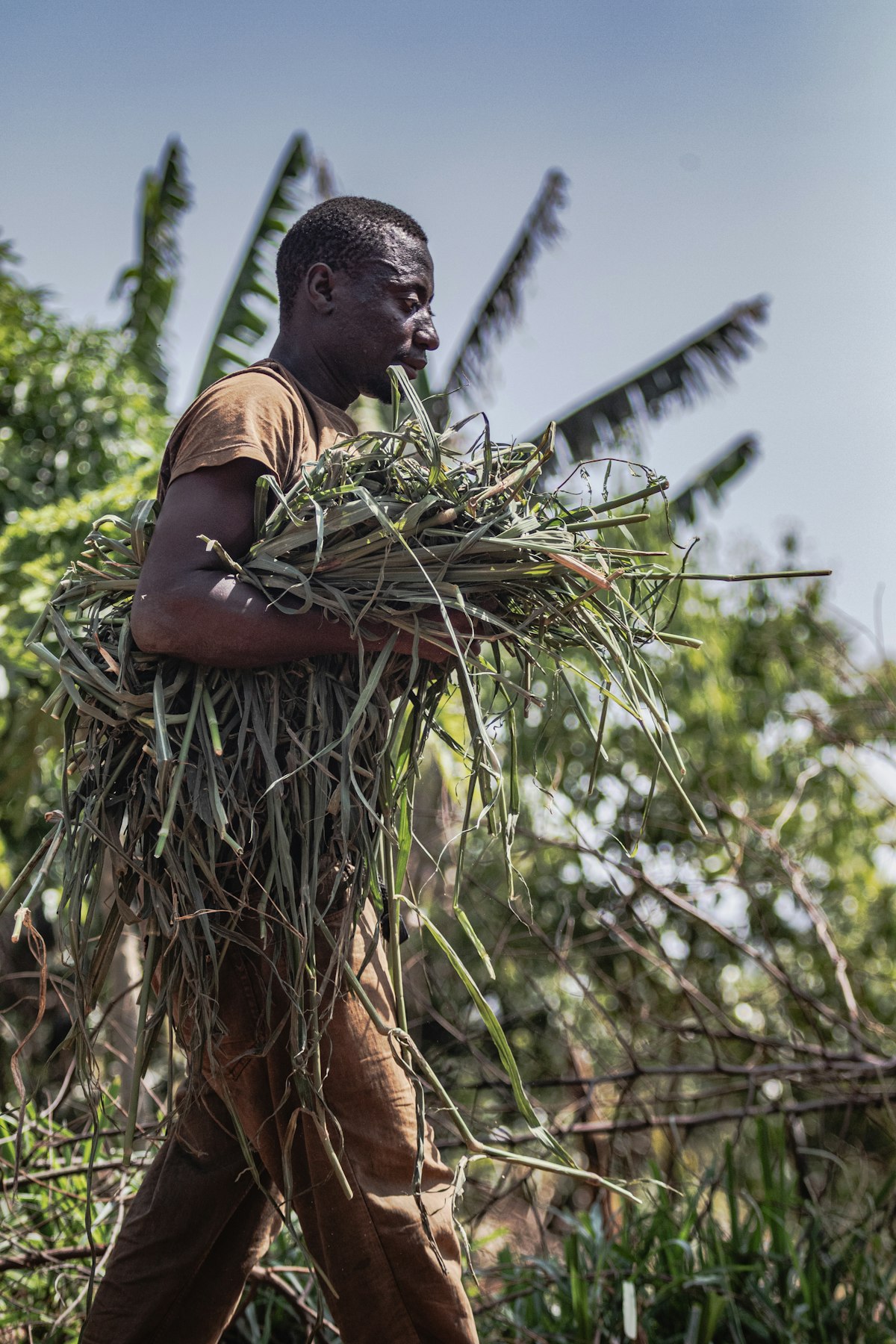
There is a story told in Ghana, through education systems, family conversations, peer pressure, and cultural messaging, about who farmers are and what farming means. In this story, the farmer is someone who could not secure formal employment, could not access university, could not find a way into the urban professional class. Farming is what happens when other options run out.
We are here to say, plainly and with evidence, that this story is wrong. And its wrongness is costing Ghana billions of cedis, millions of jobs, and the productive potential of an entire generation.
The Perception Has a Price Tag
Ghana currently spends nearly GHS 39 billion annually importing food, including vegetables, cereals, meat, sugar, and fish, with over 53.6% of the country's total food supply coming from imports in 2024 (Ghana Revenue Authority [GRA], 2024). This is not primarily a climate problem. It is not primarily a soil problem. It is, in large part, a human resources problem: Ghana does not have enough active, commercially-oriented, productive agripreneurs to meet its own food demand.
The young people who could fill that gap are choosing not to, because they have been told, by culture, by education, by aspiration, that farming is beneath them. The GHS 39 billion import bill is, in part, a measure of what that cultural narrative costs the country every single year.
The Returns the Narrative Ignores
Let us talk about numbers. Research on specific Ghanaian agribusiness ventures identifies annual investment returns of up to 30% in poultry farming and up to 40% in vegetable farming (Oxford Business Group, 2024). The formal financial sector, the sector that educated Ghanaians aspire to work in, rarely offers products that return 40% per year. An investor who puts capital into a well-managed vegetable farming operation in Greater Accra is potentially earning returns that most urban employment cannot match.
Yet the cultural narrative persists: farming is a fallback. The bank teller who earns a modest formal salary is, in the social imagination, more successful than the peri-urban vegetable farmer generating returns that would make a fund manager envious. That inversion of economic reality is the most expensive perception problem Ghana faces.
The Young Ghanaians Who Are Already Winning
The narrative is starting to crack, because some young Ghanaians are proving it wrong in ways the world can see. Dr. Iddi Mohammed Faried, co-founder of Kodu Technology from Ghana, won a USD 50,000 GoGettaz Agripreneur Prize at the Africa Food Systems Forum 2024 in Kigali. Fareeda Mustapha from Ghana won an Impact Award at the Africa Food Systems Forum 2025 in Dakar (Africa Food Systems Forum, 2024). At the BRIDGE-in Agriculture pitch competition in 2024, a young Ghanaian entrepreneur won with Tropical Snacks, a venture producing local snacks from smallholder-sourced ingredients (Mastercard Foundation & CrossBoundary Advisory, 2023).
These are not lucky anomalies. They are early signals of a generation beginning to claim its place in Ghanaian and African agribusiness. They are proof that the fallback narrative is empirically wrong, that young Ghanaians with the right skills, ambition, and support are building agricultural enterprises that win on continental and global stages.
What It Would Mean to Change the Story
Imagine a Ghana where the most ambitious, educated, and entrepreneurially minded young people competed as intensely to build agribusinesses as they currently compete for corporate jobs or places in overseas universities. Imagine the food security implications: domestic production rising, import dependency falling, rural economies revitalising. Imagine the economic implications: new enterprises, new jobs, new export revenue flowing from Ghanaian agricultural value chains into continental markets opened by AfCFTA (AfCFTA Secretariat, 2026).
This is not a fantasy. It is the logical consequence of young people choosing to apply their talent and ambition to one of Ghana's largest and most under-served economic sectors. But it will not happen automatically. It requires a deliberate reframing, a counter-narrative that is told loudly enough, and with enough credible evidence behind it, to compete with the fallback story that has been told for decades.
Our Commitment to the Counter-Narrative
At SWK Ghana, telling the counter-narrative is a core part of our work. Every webinar, every event, every panel featuring a young Ghanaian agripreneur who is building something real and profitable is a small contribution to changing a cultural story that has been too expensive for too long.
Agriculture is not a fallback. It is a frontier. And the young Ghanaians who choose to step onto that frontier right now, when the market is growing, when the policy environment is more supportive than it has been in years, when AfCFTA is opening continental markets, and when the incumbent generation is stepping back, those young people are not settling for less. They are choosing more.
References
- AfCFTA Secretariat. (2026). Agri-food trade action plan. AfCFTA Secretariat.
- Africa Food Systems Forum. (2024). GoGettaz Agripreneur Prize 2024: Programme report. Africa Food Systems Forum.
- Ghana Revenue Authority. (2024). Annual trade statistics report 2024. GRA.
- Mastercard Foundation & CrossBoundary Advisory. (2023). BRIDGE-in Agriculture: Programme overview and first-year results. Mastercard Foundation.
- Oxford Business Group. (2024). The report: Ghana 2024. Oxford Business Group.