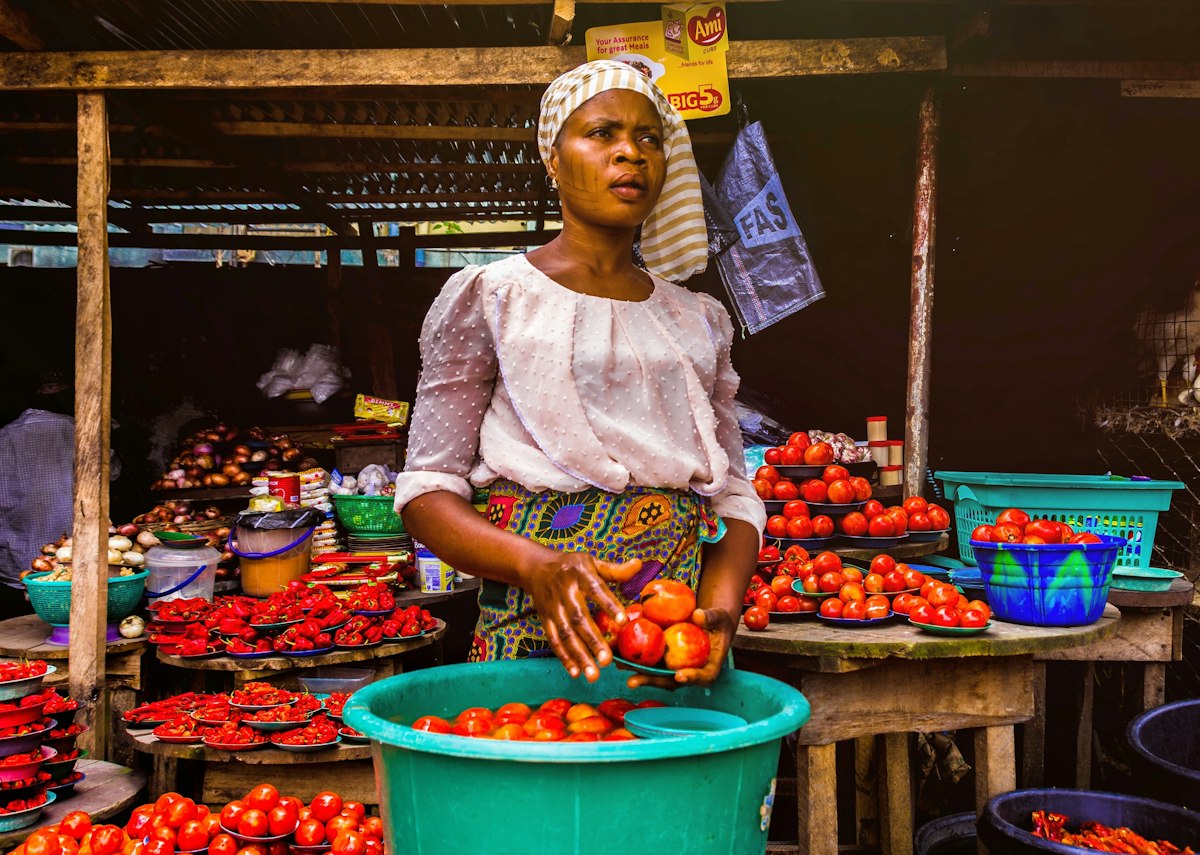
In 2024, Ghana spent nearly GHS 39 billion importing food. Vegetables. Cereals. Meat. Sugar. Fish. Products that can be grown, processed, and distributed in Ghana: many of them produced in neighbouring countries and transported across borders that should not represent barriers to domestic supply chains that could have served the same demand (Ghana Revenue Authority [GRA], 2024).
Over 53.6% of Ghana's total food supply in 2024 came from imports (GRA, 2024). In a country where 57% of total land is agricultural, where the climate supports year-round production of diverse food crops, where aquaculture potential is vast and underexploited, and where a growing urban population is creating expanding demand for diverse and processed food products, importing more than half of the nation's food is not a resource problem.
It is a market waiting to be served. And young Ghanaians are exactly the people who should be serving it.
Read the Import Bill as a Business Brief
Every line item on Ghana's food import bill is, simultaneously, a business opportunity. Every tonne of imported rice is a market for a Ghanaian rice farmer who has access to irrigated land, the right varieties, and a connection to urban buyers. Every container of imported tomato paste represents demand that a Ghanaian processing enterprise could be meeting instead. Every shipment of imported frozen fish is business that Ghanaian aquaculture operations, with GHS 100 million now allocated in the 2026 Budget, could be capturing (Ministry of Finance, Ghana, 2025).
The GHS 39 billion import bill is not a number to mourn. It is a market brief. It tells us precisely what Ghana is paying for food that it should be producing. It tells us where the demand is. And demand, for any entrepreneur, is the starting point of everything.
The Feed Ghana Programme as Market Confirmation
The government's Feed Ghana Programme, launched in April 2025, lists the specific commodities it aims to make Ghana self-sufficient in by 2028: maize, rice, soybean, sorghum, tomato, pepper, onion, cassava, yam, plantain, and broiler chicken (Government of Ghana, 2025). This is not an abstract policy statement. It is a government-confirmed market development roadmap. The government is saying, explicitly, that these are the product categories where Ghana has both domestic demand and the capacity to produce at scale, and where it intends to invest public resources to build supply chains.
For a young Ghanaian agripreneur deciding where to focus, that list is valuable intelligence. It tells you which sectors have government backing, which products have identified domestic demand, and where policy support is most likely to be available.
The Opportunity Is Urban and Peri-Urban
It is important to note that the food import dependency problem is not only a production problem. It is also a processing, logistics, and distribution problem. Much of what Ghana imports is not raw agricultural commodity but processed or packaged food product. The value added in processing, packaging, cold-chain storage, and distribution is precisely what young urban entrepreneurs can provide without necessarily being farmers themselves.
A young person in Accra who builds a cassava processing enterprise, taking locally grown cassava and turning it into flour, chips, or fufu mix for urban consumers, is addressing a piece of Ghana's food import dependency without ever putting a seed in the ground. The same applies to someone building a cold-chain logistics business that reduces post-harvest losses, a packaging enterprise that gives locally produced food the presentation it needs for urban retail, or a digital marketplace that connects smallholder farmers directly to restaurants and households in Accra.
The Generation That Was Born for This Moment
Ghana's current generation of young people, those aged 15 to 35 today, will be the primary economic actors in Ghana in 2030, when the African food market is projected to reach USD 1 trillion (African Development Bank [AfDB], 2024). They will be the generation that determines whether Ghana's GHS 39 billion food import bill grows or shrinks. They will be the generation that determines whether Ghana captures the agricultural potential of AfCFTA or watches other countries do it first.
That is not pressure. It is an extraordinary opportunity. The combination of growing demand, policy support, improving technology access, and continental market opening through AfCFTA creates conditions that are, by any historical comparison, unusually favourable for young people entering agribusiness right now.
The GHS 39 billion is not a failure to lament. It is a market to enter. And we believe Ghana's young people are more than capable of entering it, given the right skills, connections, support, and inspiration. That is precisely why SWK Ghana exists, and precisely what we are building toward in 2026.
References
- African Development Bank. (2024). African economic outlook 2024. African Development Bank Group.
- Ghana Revenue Authority. (2024). Annual trade statistics report 2024. GRA.
- Government of Ghana. (2025). Feed Ghana programme: Framework and implementation plan. Ministry of Food and Agriculture.
- Ministry of Finance, Ghana. (2025). The budget statement and economic policy of the Government of Ghana for the 2026 financial year. Ministry of Finance.