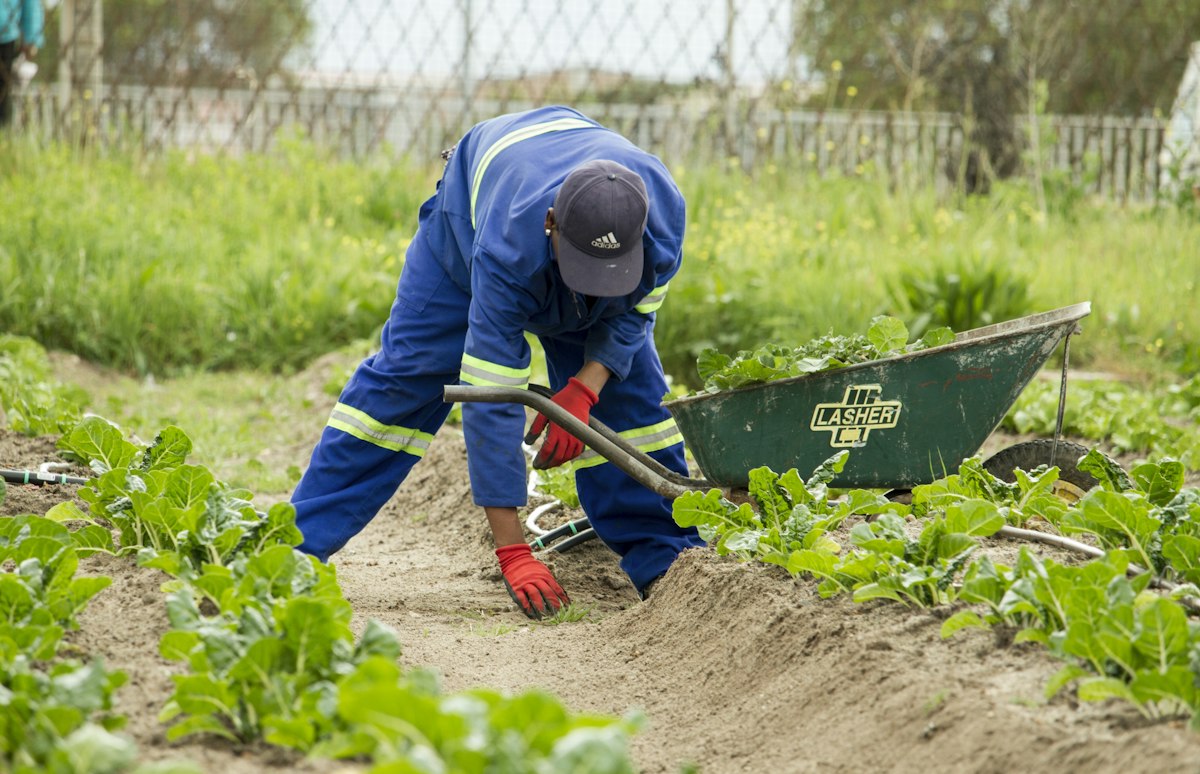
We are not in the habit of making grand claims about historical moments. But looking honestly at the conditions that exist in Ghana and across Africa in 2026, we believe that this year represents a genuine inflection point for youth agribusiness: a moment when a constellation of forces has aligned in ways that are historically unprecedented.
Let us make the case, factor by factor, and let the evidence speak for itself.
The Market Has Never Been This Large or This Accessible
Africa's food and agriculture market is on a trajectory from USD 280 billion in 2023 to USD 1 trillion by 2030 (African Development Bank [AfDB], 2024). Ghana's own agribusiness sector is projected to reach USD 3.8 billion by 2028 (Oxford Business Group, 2024). The urban middle class in Greater Accra is expanding rapidly, creating growing demand for processed, packaged, and diverse food products. These markets are not hypothetical. They are operating, growing, and accessible today.
For a young Ghanaian agripreneur making a decision about where to invest their time, skills, and capital in 2026, the market backdrop is more favourable than at any previous point in Ghana's history. The demand is there. The question is whether the supply of talented, well-trained, market-connected young agripreneurs will rise to meet it.
AfCFTA Is Operational and Moving Fast
The African Continental Free Trade Area, headquartered in Accra, is an active, operational agreement with growing trade flows. Its January 2026 Agri-Food Trade Action Plan has set a specific roadmap for reducing barriers to agricultural trade across 54 African nations (AfCFTA Secretariat, 2026). The World Economic Forum has projected a 574% increase in intra-African agricultural trade under AfCFTA's full implementation (World Economic Forum, 2020).
For Ghanaian agripreneurs, AfCFTA transforms the scale of ambition that is economically rational. A business built to serve Ghana's domestic market now has direct access, through a progressively harmonised continental trade framework, to a market of 1.7 billion people. The time to build that business is now, while the market is opening and before the most attractive positions are taken.
Ghana's Policy Environment Is the Most Supportive in Years
The Mahama administration has made youth agribusiness a visible priority in ways that translate into actual budget commitments and institutional changes. The Feed Ghana Programme, launched in April 2025, has a specific mandate and a specific commodity list (Government of Ghana, 2025). The 2026 Budget includes GHS 100 million for aquaculture. GIRSAL is actively working to de-risk agricultural lending. NEIP is funding agribusiness pitches and greenhouse enterprises (Ministry of Finance, Ghana, 2025).
And perhaps most significantly, Ghana has created a new Ministry of Youth Development and Empowerment, separated from sports for the first time, with an explicit mandate to connect young people to agricultural livelihoods. The Minister's public statement that "we must be intentional about changing the mindset of young people" signals an administration that understands the perception problem and is committed to doing something about it.
Technology Is Levelling the Playing Field
Over 60% of African agribusinesses are expected to adopt digital innovation tools by 2026 (World Bank, 2023). In Ghana, where mobile phone penetration exceeds 80%, young people already have access to platforms that are transforming the economics of farming: digital credit tools, yield-indexed insurance, market information platforms, and satellite-based monitoring systems that previously required expensive infrastructure are now accessible from a smartphone.
Young people's technological fluency is an asset in this environment, a competitive advantage over the older farmer generation that the sector has never before been able to offer them. The digital transformation of agriculture is, in effect, creating a window of opportunity for young entrants who are willing to combine technology adoption with agricultural ambition.
Young Ghanaians Are Already Winning
The narrative is shifting because the evidence is accumulating. Ghana has produced continental agribusiness prize winners (Africa Food Systems Forum, 2024). The BRIDGE-in Agriculture programme has already impacted 86,000 youth in Ghana, demonstrating at scale that when the right support systems exist, Ghanaian young people engage with agriculture productively and enthusiastically (Mastercard Foundation & CrossBoundary Advisory, 2023).
These are not isolated success stories. They are the early chapters of a generational shift in who Ghana's agripreneurs are and where they come from. Every success story that becomes visible changes the perception of what is possible for the young person who hears it. And changed perception is the beginning of changed behaviour (FAO, 2014).
SWK Ghana's Role in This Moment
SWK Ghana enters 2026 with validated credibility and growing momentum: a confirmed ambassadorship with the GIZ and EU Agribusiness e-Academy, founding membership of the YoGSEC Consortium, an invitation-only presence at Ghana's Gastro Feastival 2025, and 230 verified webinar participants from nine countries who are actively engaged in our growing community (SWK Ghana, 2025).
The August 2026 In-Person Agribusiness Event is our response to this moment: our contribution to making 2026 the year that measurably changes the trajectory of youth agribusiness in Ghana. It will be free, open-access, and practically-oriented. It will be held in Accra, at the centre of the community it is designed to serve. And it will connect participants not just to knowledge, but to each other and to the growing ecosystem of programmes, financing, and markets that are available to Ghana's next generation of agripreneurs.
The conditions are right. The market is open. The support is available. The moment is now. And SWK Ghana is here to help Ghana's young people claim it.
References
- AfCFTA Secretariat. (2026). Agri-food trade action plan. AfCFTA Secretariat.
- Africa Food Systems Forum. (2024). GoGettaz Agripreneur Prize 2024: Programme report. Africa Food Systems Forum.
- African Development Bank. (2024). African economic outlook 2024. African Development Bank Group.
- Food and Agriculture Organization of the United Nations. (2014). Youth and agriculture: Key challenges and concrete solutions. FAO.
- Government of Ghana. (2025). Feed Ghana programme: Framework and implementation plan. Ministry of Food and Agriculture.
- Mastercard Foundation & CrossBoundary Advisory. (2023). BRIDGE-in Agriculture: Programme overview and first-year results. Mastercard Foundation.
- Ministry of Finance, Ghana. (2025). The budget statement and economic policy of the Government of Ghana for the 2026 financial year. Ministry of Finance.
- Oxford Business Group. (2024). The report: Ghana 2024. Oxford Business Group.
- SWK Ghana. (2025). Agribusiness webinar series: Participation and engagement report, September–November 2025. SWK Ghana.
- World Bank. (2023). Digital agriculture: Opportunities and challenges for smallholder farmers in sub-Saharan Africa. World Bank Group.
- World Economic Forum. (2020). How the African Continental Free Trade Area could boost intra-African trade. WEF.