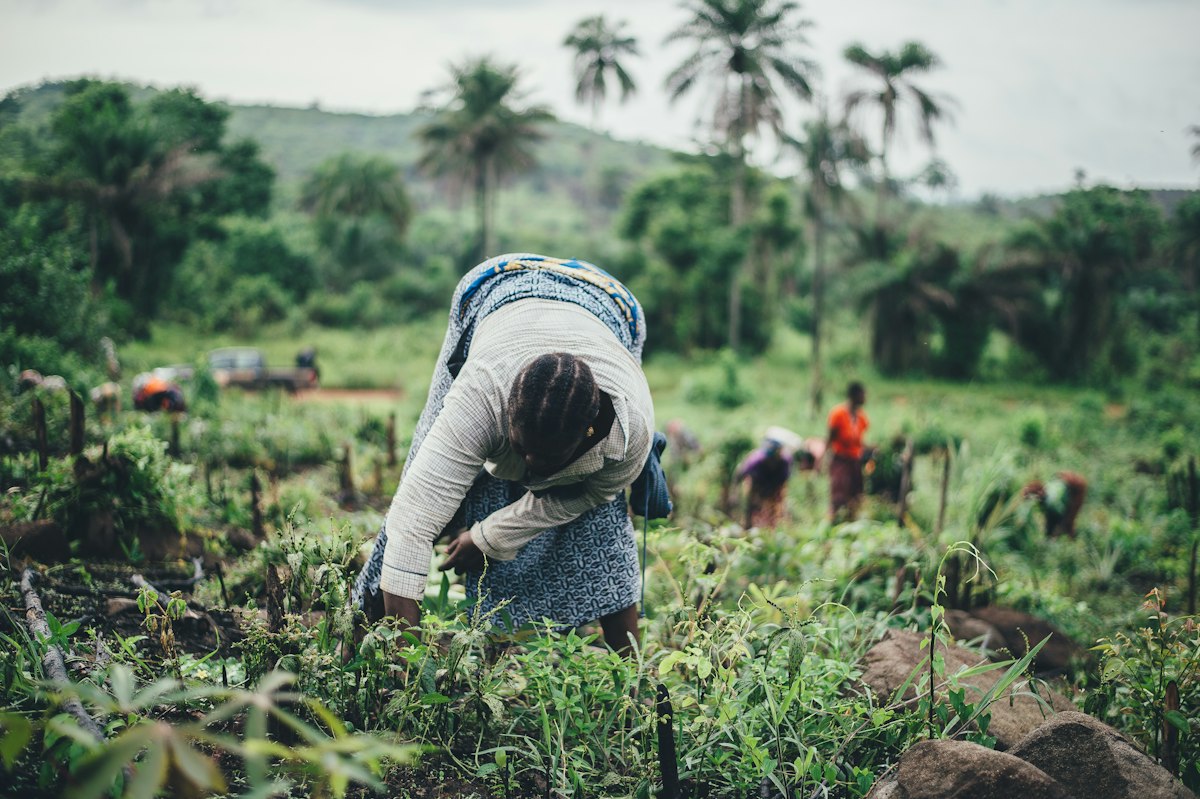
In 2005, 54% of the world's working youth were employed in agrifood systems. By 2021, that figure had dropped to 44%. A 10-percentage-point decline in just 16 years may sound modest in statistical terms. In human terms, it represents tens of millions of young people who left, or chose never to enter, the sector that feeds the world (Food and Agriculture Organization [FAO], 2024).
This is not a story about laziness or a lack of opportunity. It is a story about rational choices made in the face of structural disadvantages. And to reverse the trend, we first need to understand it.
The World Is Urbanising Faster Than We Think
The single most powerful force driving young people out of agriculture is urbanisation. Cities now house 45% of the global population, more than double their share in 1950. The United Nations projects that two-thirds of humanity will live in urban areas by 2050, with the fastest growth concentrated in Africa and Asia, precisely the regions where agriculture's contribution to livelihoods remains highest (United Nations Department of Economic and Social Affairs [UN DESA], 2022).
When a young person in a rural area weighs farming against moving to the city, they are comparing more than income. They are comparing social status, educational access, healthcare, entertainment, connectivity, and the possibility of a career that is seen by their community, their peers, and often their own family as worthy of their ambitions. On most of these dimensions, the city wins. And so they go.
Food Insecurity Is Rising Among Those Who Produce Food
One of the most troubling findings from the FAO's 2024 report on youth in agrifood systems is that food insecurity among youth has risen sharply in the very regions most dependent on agriculture. Between 2014 to 2016 and 2021 to 2023, the share of youth experiencing food insecurity rose from 16.7% to 24.4% globally, with the most dramatic deterioration in Africa (FAO, 2024).
This matters for understanding youth disengagement. When farming cannot reliably feed the farmer, when a bad season or a broken market link means hunger, young people learn the lesson quickly. Agriculture is risky, unforgiving, and poorly compensated. They choose other paths wherever other paths exist.
The NEET Generation
Over 20% of the world's youth are currently classified as NEET: Not in Employment, Education, or Training. Young women are twice as likely as young men to fall into this category (International Labour Organization [ILO], 2023). In sub-Saharan Africa and parts of Asia, NEET rates are substantially higher, particularly in rural areas where formal employment is scarce and the only visible alternative to agriculture is informal urban labour.
The NEET phenomenon is not about young people being unwilling to work. It is about systems that have failed to offer them work that is accessible, dignified, and financially viable. Agriculture, as currently structured in most developing economies, has not made that offer convincingly enough.
The USD 1.5 Trillion Argument for Changing Course
The FAO has quantified what it would mean to reverse this trend. Eliminating youth unemployment and bringing NEET youth aged 20 to 24 into productive employment could boost global GDP by 1.4%, equivalent to approximately USD 1.5 trillion in additional economic value. Of that increase, roughly 45% would come from agrifood systems alone (FAO, 2024).
That figure reframes the conversation. Youth agricultural engagement is not a charitable objective or a development nicety. It is one of the highest-return economic interventions available to developing nations, including Ghana.
The Education Disconnect
Only 2 to 4% of university students in sub-Saharan Africa and Asia are enrolled in agricultural studies, according to research by the International Fund for Agricultural Development (IFAD, 2019). Education systems across the developing world have systematically steered young people away from agriculture through curriculum design, teacher attitudes, career guidance, and the implicit hierarchy of what counts as a successful profession.
The result is a generation of educated young people who have been taught, in explicit and implicit ways, that agriculture is what you do when you have failed at everything else. That belief is both empirically wrong and economically catastrophic, and dismantling it is one of the most important communication challenges facing organisations working in youth agribusiness today.
What Reversal Requires
Reversing the 16-year decline in youth agricultural participation requires more than schemes and subsidies. It requires a fundamental reframing of what agriculture is and what it can offer. It requires education systems that present agribusiness as a viable and prestigious career. It requires financial products designed for young people without collateral. It requires land access mechanisms that do not require inheritance. And it requires visible, inspiring examples of young people winning in agribusiness, proving with their own success stories that the sector is not a trap, but a launch pad.
That is the conversation SWK Ghana is committed to leading in Ghana and across West Africa. Because the tens of millions who left agriculture in 16 years is not a fixed fact. It is a challenge, and challenges have solutions.
References
- Food and Agriculture Organization of the United Nations. (2024). Status of youth in agrifood systems 2024. FAO. https://doi.org/10.4060/cd1866en
- International Fund for Agricultural Development. (2019). Creating opportunities for rural youth. IFAD. https://doi.org/10.18356/d8c2b85e-en
- International Labour Organization. (2023). World employment and social outlook: Trends 2023. International Labour Office. https://doi.org/10.54394/FHEM8371
- United Nations Department of Economic and Social Affairs. (2022). World urbanization prospects: The 2022 revision. United Nations. https://doi.org/10.18356/9789210014984