Climate change is often discussed as a distant, future problem. In Ghana, it is neither distant nor future. It is here, and it is already reshaping how communities live, farm, and plan for tomorrow.
Coastal communities from Keta to Ada are losing homes and land to rising seas and tidal surges. Rainfall has become less predictable, disrupting the planting calendars that farming families have relied on for generations. And illegal small-scale mining — known locally as galamsey — has turned once-clear rivers like the Pra, Ankobra, and Birim brown with pollution, threatening the drinking water of millions.
These are not abstract statistics. They are the lived reality of the very young people SWK Ghana exists to empower.
The Generation With the Most at Stake
Ghana is a young country. More than half of the population is under the age of 25. That means the decisions made about our environment today will be inherited, in full, by a generation that is only now coming of age. Young Ghanaians will spend their entire adult lives inside the climate we build in this decade.
There is a hard injustice in this. The people who will bear the heaviest burden of climate change contributed the least to causing it. But inside that injustice lies a mandate: if young people are going to inherit the consequences, they must also hold the pen when the solutions are written.
Climate action is not something that should happen to young people. It is something that must be led by them.
What Youth-Led Climate Action Looks Like
At SWK Ghana, climate action is not a single event or a hashtag. It is a sustained programme of education, advocacy, and practical projects that give young people the knowledge and the platform to act. That work takes several forms:
- Climate education: Helping young people understand the science of climate change and, crucially, connect it to what they see in their own communities — the flooded street, the failed harvest, the polluted stream.
- Advocacy and voice: Amplifying youth perspectives in conversations about climate policy, from local assemblies to continental platforms, so that decisions are shaped by the people who will live with them longest.
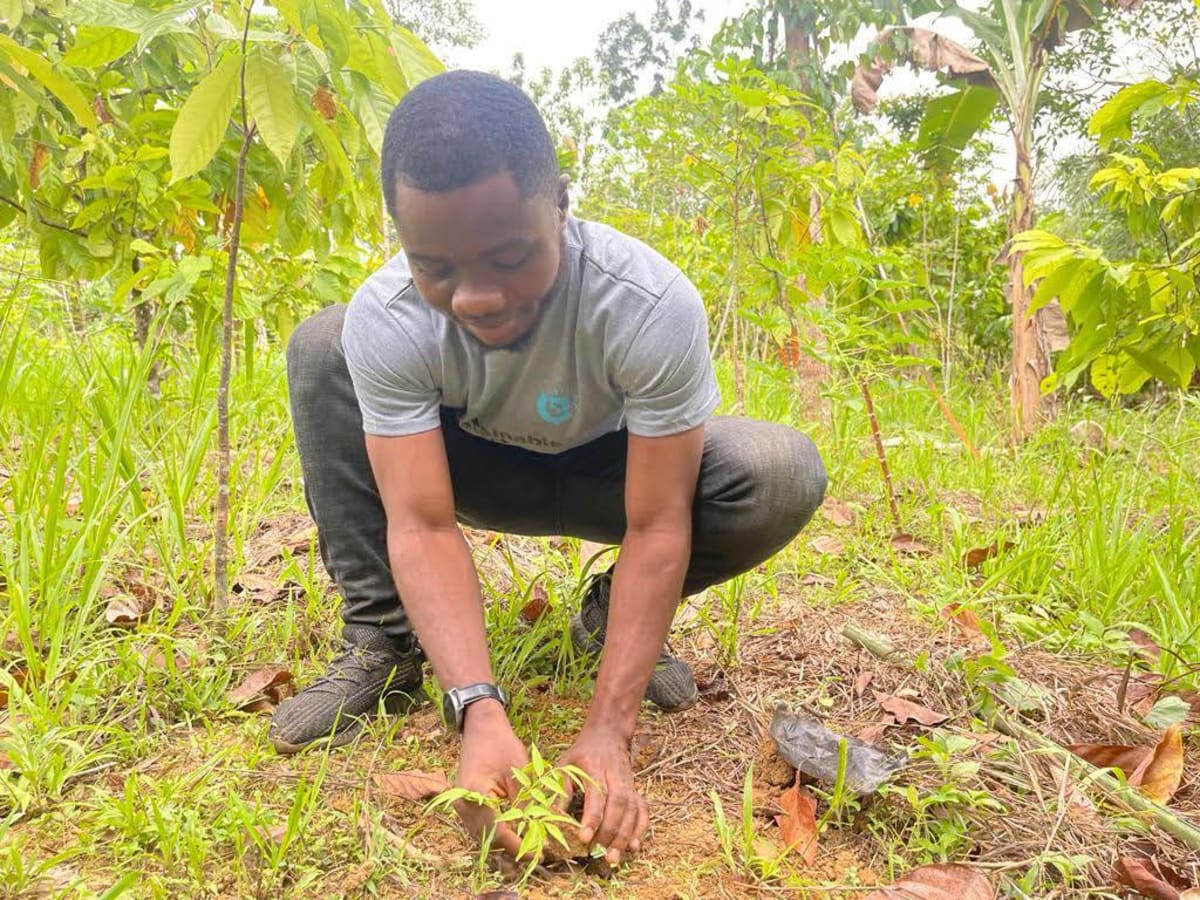
- Practical projects: Tree planting, clean-up drives, conservation initiatives, and campaigns against galamsey that turn awareness into visible, measurable change.
From Awareness to Action
Awareness alone changes nothing. Every young person in Ghana already knows the weather is behaving strangely. What is missing is not information but agency — the belief that an individual can do something, and the practical pathway to do it.
This is the gap SWK Ghana works to close. When a young person plants a tree, joins a river clean-up, or stands up in a community forum to demand better waste management, something shifts. Climate action stops being a problem for governments and international summits and becomes something they own.
A Fight Worth Choosing
Ghana’s climate challenge is real, and it is serious. But this generation of young Ghanaians is the largest, most connected, and most educated in the nation’s history. They have the numbers, the tools, and — increasingly — the will.
The question is not whether young people will be affected by climate change. They will. The question is whether they will be its victims or its authors. At SWK Ghana, we are betting on the latter, and we are building the programmes to make it possible.